
PROGRAM LEVEL
Interior Architecture program is also an offered degree which is all about equipping the future Interior Architects with the needed knowledge for creating spatial experiences for the targeted users. This degree aims to graduate students with skills that are required for the presentation of these spatial experiences that are created through a thorough understanding of the users’ needs, quality of interior environments, structure, manufacturing, and construction.
With the Kingdom’s of Bahrain vision 2030, the goal of the strategy is to improve the infrastructure, industry, housing and so on. Interior Architecture as a profession is needed as the construction sector in the Kingdom of Bahrain is growing. Even through the Pandemic, the construction sector kept resilient.
The University of Bahrain started introducing Interior Design as a Diploma in 1998, and then the Interior Design as a BSc degree started with in 2002 and reviewed and approved in 2014 and 2016.
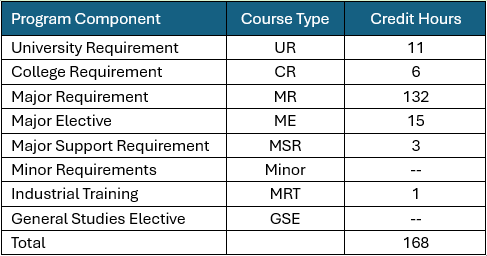
THE CURRICULUM OF BACHELOR OF INTERIOR ARCHITECTURE IS COMPOSED OF 168 CREDIT HOURS:
ABOUT THE PROGRAM
DETAILED STUDY PLAN
- Download Detailed Study Plan 2025 (PDF، 0.5 MB، 13 Pages).
- Download Detailed Study Plan 2022 (PDF، 0.5 MB، 13 Pages).
- Download Detailed Study Plan 2014 (PDF، 0.6 MB، 10 Pages).
PROGRAM OBJECTIVES
1. To provide educational opportunities to the students to grasp the complexity of interior architecture.
2. To promote the innovative and creative exploration of spatial and environmental opportunities availed by emerging developments.
3. To produce graduates who will excel in the art of design and progress in their careers and acquire leadership positions.
PROGRAM INTENDED LEARNING OUTCOMES
CIDA Standard 4 (S4) equivalent to PILO1.
Global Context: Relate Interior Design work with an advanced-level understanding of global view and present it in social, cultural, economic, and ecological context. PILO 1 (S4).
CIDA Standard 6 (S6) equivalent to PILO 3. Business Practices and Professionalism: Recognize principles and processes of Interior Design profession that define its scope and features and add value of Interior Design to the society. PILO 3 (S6).
CIDA Standard 7 (S7) equivalent to PILO 4.
Human-Centered Design: Apply knowledge of core theories around human experience and behavior to design the built environment. PILO 4 (S7).
CIDA Standard 8 (S8) equivalent to PILO 5.
Design Process: Employ range of design approaches and processes to formulate evidence-based solutions to design problems creatively. PILO 5 (S8).
CIDA Standard 9 (S9) equivalent to PILO 6.
Communication: Show effective specialized communication visually and verbally. PILO 6 (S9).
CIDA Standard 10 (S10) equivalent to PILO 7.
History and Theory: Apply some research investigation on history and theory of different arts, architecture and interior design disciplines while solving design problems. PILO 7 (S10).
CIDA Standard 11 (S11) equivalent to PILO 8.
Design Elements and Principles: Use to a specialist level the elements and principles of design. PILO 8 (S11).
CIDA Standard 12 (S12) equivalent to PILO 9.
Light and Color: Demonstrate advanced-level knowledge of theories of light and color, to be used effectively in relation to environmental impact and human wellbeing. PILO 9 (S12).
CIDA Standard 13 (S13) equivalent to PILO 10.
Products and Materials: Construct design solutions that integrate furnishings, products, materials, and finishes. PILO 10 (S13).
CIDA Standard 14 (S14) equivalent to PILO 11.
Environmental Systems and Comfort: Assess and use advance knowledge of acoustics, thermal comfort, and indoor air quality in design with relation to environmental impact and human wellbeing. PILO 11 (S14).
CIDA Standard 15 (S15) equivalent to PILO 12.
Construction: Employ the knowledge of construction and its interrelationship with base building construction and systems. PILO 12 (S15).
CIDA Standard 16 (S16) equivalent to PILO 13.
Regulations and Guidelines: Apply an advanced understanding of laws, codes, standards, and guidelines that impact human experience of interior architectural spaces PILO 13 (S16).